
5.4 Accessibility and Differentiation
Differentiation and Accessibility Strategies

Differentiation is key to consider in all active aging activities. Activities need to be planned to take into account individual needs, mobility and support requirements. Your One Page Profile will help you gather this information. Use this to ensure that you can take into account each individual in a group or if a solo activity, how this can be accessed successfully by this person. This could include adjustments such as:
- Step by step instructions
- Visual Cues
- Picture communication
- Hand over hand guidance
- Simple language
Accessibility is similar and focuses more on the ability of the individual. This can include taking into account the space being used, the mobility of the individuals and the activity physicality. Taking this into account it could include adjustments such as:
- Ramps in and out of spaces
- Chairs near by for people to rest
- Having sitting options and standing options to activities
- Ensuring objects are easily handled with low fine motor skills
- Guiding individuals physically
Differentiation and accessibility are important to ensure equality, diversity and inclusion. Taking the initiative within activities will also be key to ensure that any barriers can be removed if they arise within an activity.
Case Study
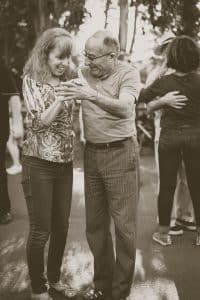 Jane is running a ballroom dance activity. The space has steps at the entrance and exit and all chairs are locked away in a store room. Jane knew that she had several participants that struggled to be on their feet for a long period of time. Jane arranged for the room to gain a ramp for the entrance and exit. She also got a number of chairs out of the store room to ensure there were opportunities for these to be used. She also adapted some dance moves to allow for some seated dance for those this was more appropriate for.
Jane knew she also had some individuals who struggle to remember information in order. Jane create some visual A4 cards to support her when running through the dance. These would be held up while going through the moves so those who find visual cues helpful or require prompts to remember could follow these visual cues.
Working together to support active aging
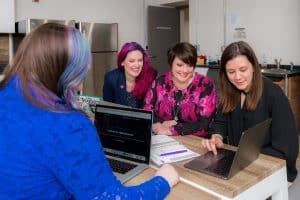 It is key that information is shared between agencies that are working with individuals. Active aging needs clear plans throughout a persons week and therefore if there is support between different people communication is key. This will also support the One Page Profile development and the sharing of accessibility and differentiation needs. Ways in which a team can work together include:
- Regular reviews of support needs
- Updated One Page Profiles that are shared
- Clear vision and goals set for individuals and shared with all agencies
- Share knowledge and training to ensure everyone is skilled
- Email updates on a regular basis
- Meet to plan activities together
Community is also important for those with additional needs but also those who are elderly. Getting people involved in the community through projects, community groups and using community spaces. This gains more partners in supporting the community to be involved in active aging.